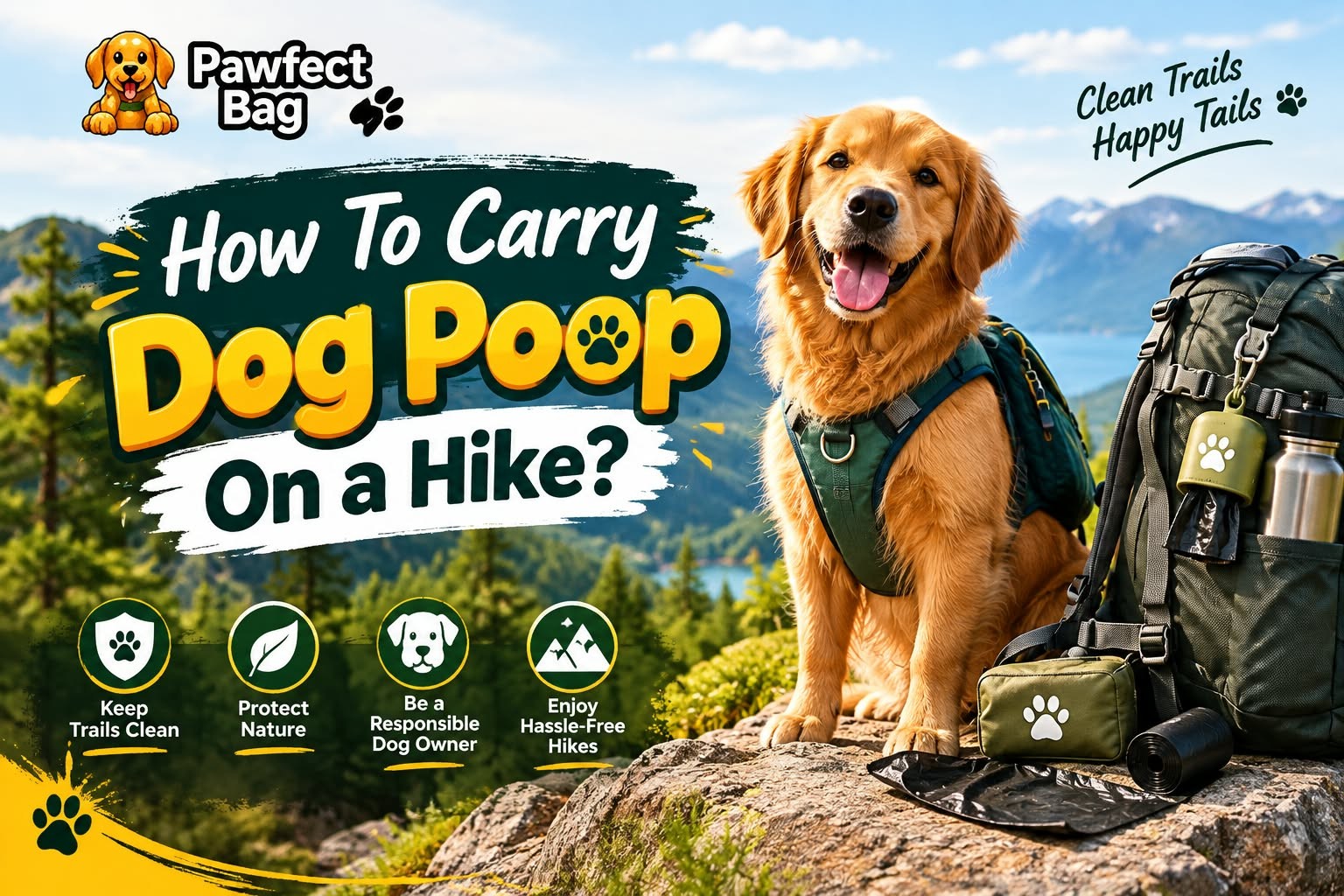
How To Carry Dog Poop on a Hike: 7 Best & Easy Tips
Hiking with your dog is one of the best ways to enjoy the outdoors together. You get fresh air and exercise, while your dog gets new sights, smells, and experiences. But every dog owner eventually faces one less enjoyable part of the adventure: dealing with dog waste when there is no bin nearby.
If you have wondered how to carry dog poop on a hike, the solution is mostly about preparation. Bring enough waste bags, pick up after your dog, seal the waste securely, and carry it until you reach an appropriate disposal point.
That sounds simple, but on a long trail, carrying a smelly waste bag in your hand for several miles is hardly ideal. This guide explains practical ways to manage dog waste while keeping your hike clean, comfortable, and responsible.
1. Why Should You Pick Up Dog Poop on a Hiking Trail?
Dog waste may seem harmless because you are outdoors, but leaving it beside a trail is not the same as wildlife naturally leaving waste in its habitat.
The National Park Service guidance for hiking with pets advises visitors to pick up pet waste and dispose of it properly. Dog waste can create an unpleasant environment for other walkers and may introduce unwanted organisms into natural areas.
There is a health consideration too. The CDC’s guidance for dog owners explains that dog poop can contain germs capable of making people and animals sick and recommends picking it up.
So understanding how to carry dog poop on a hike is not simply about avoiding an unpleasant smell. It is part of being a considerate dog owner and responsible trail user.
2. What Is the Best Way to Carry Dog Poop on a Hike?
For most people, the easiest method starts with strong, leak-resistant dog waste bags.
After your dog goes, pick up the waste, carefully remove excess air from the bag, and tie it securely. If you are going to carry it for a long distance, consider double-bagging it. You can then place the sealed bag inside a dedicated waste carrier or separate washable compartment.
Avoid putting a used waste bag directly beside snacks, drinking water, or items you regularly touch.
When considering how to carry dog poop on a hike, think about accessibility too. Keep unused waste bags somewhere you can reach quickly. Searching through a full rucksack while trying to manage your dog on a lead can become frustrating.
For anyone learning how to carry dog poop on a hike, having a designated place for sealed waste means you will not have to improvise halfway through the trail.
The UK government’s Countryside Code advises visitors to clean up after their dogs and dispose of waste responsibly.
A dedicated dog walking bag can also make organising your equipment easier. You can explore Pawfect Bag for a practical way to keep everyday dog-walking essentials together.
3. How Can You Reduce the Smell While Carrying Dog Poop?
Odour is one of the biggest reasons people dislike carrying dog waste on longer walks. Fortunately, a few simple habits can make it much easier.
Use a strong bag and tie it tightly. Double-bagging can provide another barrier against odour and accidental leakage. A dedicated sealed container can provide additional separation from the rest of your belongings.
If you regularly take long walks, keep your clean bags, treats, lead accessories, and other dog walking essentials organised so you can deal with waste quickly when necessary.
Learning how to carry dog poop on a hike comfortably is ultimately about creating a simple routine: pick it up immediately, seal it properly, store it separately, and continue your walk.
The Leave No Trace explanation of dog poop versus wildlife waste also explains why pet waste should be picked up rather than treated like naturally occurring wildlife waste.
4. Can You Leave Bagged Dog Poop on the Trail and Collect It Later?
It is better not to.
Some walkers leave a tied waste bag beside the path with the intention of collecting it on their way back. The problem is that plans change, bags get forgotten, and other trail users are left looking at plastic bags of dog waste.
If there is no bin available, carry the sealed bag with you until you reach an appropriate disposal point.
This is particularly important when learning how to carry dog poop on a hike in remote locations. Plan as though there will be no bins on the route. If you happen to find one, that is simply more convenient.
A hands-free walking setup can make carrying your other equipment easier. Pawfect Bag can help keep frequently used dog-walking items organised rather than having loose essentials spread between different pockets.
5. What Should You Pack for a Dog-Friendly Hike?
Good preparation involves more than waste bags. What you need will depend on your dog, the weather, trail length, and location, but a basic dog hiking essentials kit may include spare waste bags, drinking water, a portable bowl, treats, a secure lead, and basic first-aid supplies.
Always bring more waste bags than you expect to use. Bags can tear, you can lose one, or your dog may need to go several times.
The RSPCA’s dog walking guidance provides advice about appropriate exercise and keeping dogs safe while walking.
Organisation can make a noticeable difference too. Keep items you use frequently within easy reach rather than at the bottom of your backpack.
If you are planning how to carry dog poop on a hike, decide where the used bag will go before you leave home. Having a designated solution is much better than discovering halfway through the walk that your only option is carrying it in your hand.
Preparing in advance for how to carry dog poop on a hike also means considering how long you may be away from the nearest suitable waste bin.
For organising treats, waste bags, your phone, keys, and other essentials, visit Pawfect Bag and explore a more convenient way to carry your dog-walking equipment.
6. What Should You Do If There Are No Dog-Waste Bins on the Trail?
If there are no bins, the basic rule remains the same: take the waste with you.
Do not leave an unbagged pile beside the path, and do not abandon the filled plastic bag. Securely bag the waste and carry it until you reach somewhere it can be disposed of appropriately.
Local rules may also apply. The UK Government guidance on controlling your dog in public explains that councils can use Public Spaces Protection Orders covering matters such as dog fouling, so requirements can differ by location.
This makes checking local trail rules worthwhile before starting your hike.
When deciding how to carry dog poop on a hike, prepare for the longest realistic period you might have to carry it. A short walk may mean ten minutes; a remote hike could mean several hours.
Practical Tips Before You Hit the Trail
Before leaving home, check whether dogs are permitted on your chosen route and whether there are any local restrictions. Pack extra waste bags rather than taking exactly the number you think you will need.
Keep clean bags somewhere accessible and designate a separate place for used ones. If you expect a long hike, double-bagging or using a sealed waste carrier can make carrying waste more comfortable.
Also consider your dog’s needs. Bring sufficient water, take appropriate breaks, and adjust your plans if the weather becomes unsuitable.
Understanding how to carry dog poop on a hike is ultimately less about finding a complicated technique and more about having a reliable system before you start walking.
Once you have a routine for how to carry dog poop on a hike, managing waste becomes quicker and less disruptive to the rest of your walk.
Final Thoughts
Hiking with your dog should be about enjoying the outdoors, not worrying about what happens when your dog needs the toilet. A little preparation solves most of the problem.
Bring spare bags, pick up the waste promptly, seal it securely, keep it separate from food and personal items, and carry it until you find an appropriate place to dispose of it.
Keeping the rest of your walking equipment organised can make things easier too. For a convenient way to carry treats, clean waste bags, your phone, keys, and other everyday dog-walking items, explore Pawfect Bag.
With the right preparation and responsible trail habits, you and your dog can enjoy cleaner, easier, and more comfortable adventures together.